
The Best Coffee Machines for Small Apartments (2025)
We compared compact capsule, manual espresso, drip, and bean‑to‑cup machines using official specs, pricing in Germany, and reputable reviews. Our picks prioritize footprint, ease of use, energy features, and upkeep in tight spaces.
Overview
How to choose for a small apartment
Space and noise trade‑offs
Maintenance and water quality
About prices and availability
Top Picks
Nespresso Essenza Mini (Original line)
The smallest footprint option for real espresso‑style shots with one‑touch ease and quick auto‑off.
Pros
- +Extremely compact footprint (as little as 84 × 330 × 204 mm)
- +One‑touch operation; quick, convenient shots
- +Auto‑off after 9 minutes helps save energy in small flats
- +Capsules can be recycled in Germany via Gelbe Tonne/Bag or Nespresso Boutiques
Cons
- -Small 0.6 L tank needs frequent refills
- -No built‑in milk system (use a separate frother)
- -Ongoing capsule cost vs beans
Verdict
If space is your top constraint, this is the easiest, tidiest espresso solution. Recycling options in Germany help mitigate capsule waste, making it an excellent small‑apartment choice.
Criteria Scores
Melitta Aromaboy 1015
Ultra‑compact, two‑cup drip machine that fits virtually anywhere and costs very little.
Pros
- +Tiny body (198 × 168 × 128 mm) fits micro‑kitchens
- +Very affordable compared with most alternatives
- +Auto shut‑off after 40 minutes
Cons
- -Basic brewer without premium certifications
- -Auto‑off delay (40 minutes) is longer than ideal for energy savings
- -Not for espresso or milk‑based drinks
Verdict
If you just need a small, inexpensive coffee maker, this is hard to beat for size and price. Great backup or everyday solution for tiny apartments.
Criteria Scores
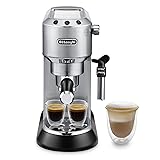
De'Longhi Dedica EC685
A very slim manual espresso machine (about 15 cm wide) that can use E.S.E. pods to save space.
Pros
- +Only ~15 cm wide (149 × 330 × 305 mm) saves precious counter width
- +Works with ground coffee or E.S.E. pods—pods help avoid a separate grinder
- +Includes steam wand for milk drinks
Cons
- -Manual workflow has a learning curve vs one‑touch machines
- -Using fresh grounds typically requires a separate grinder, adding footprint
- -Depth is greater than capsule machines
Verdict
Great when you want real espresso but have almost no width to spare. E.S.E. pod compatibility is a space‑saving fallback if you don’t want a grinder on the counter.
Criteria Scores
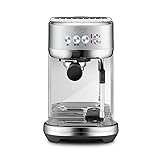
Sage The Bambino Plus (SES500)
A slightly larger compact espresso machine that’s an editor favorite for small kitchens.
Pros
- +Still compact (19.5 × 32 × 31 cm)
- +Highlighted by independent testers as a top compact pick
- +Good platform for milk drinks in a small space
Cons
- -No built‑in grinder—needs extra counter space
- -Higher price than basic compact espresso machines
Verdict
For espresso lovers who can spare a bit more space and budget, the Bambino Plus is a well‑reviewed compact upgrade that handles daily milk drinks confidently.
Criteria Scores
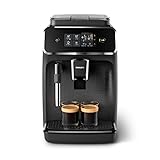
Philips 2200 Series EP2220
Narrow, entry‑level bean‑to‑cup with integrated grinder—convenient if you can spare the depth.
Pros
- +Integrated grinder avoids a separate mill on your counter
- +Relatively narrow width for a bean‑to‑cup (246 mm) with a large 1.8 L tank
- +One‑touch espresso/coffee convenience
Cons
- -Deep chassis (~433 mm) needs more counter depth
- -Grinder adds noise compared to capsule/manual machines (user reports)
- -Larger and louder overall than capsule/manual options
Verdict
A sensible one‑box solution for tight but adequately deep counters. If you want fresh‑ground convenience without separate gear, this is the compact automatic to consider.
Criteria Scores
All Products
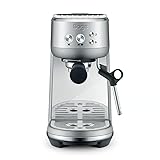
Sage The Bambino (SES450)
Compact manual espresso with 3‑second heat‑up; best with a separate grinder for consistent results.
Pros
- +Compact footprint (15.5 × 35 × 32 cm)
- +ThermoJet heats in about 3 seconds for quick morning shots
- +Well‑regarded compact choice; good for small kitchens
Cons
- -No built‑in grinder—needs space for a mill
- -Manual workflow and milk steaming skill required
- -More expensive than entry‑level manual options
Verdict
If you have room for a small grinder, the Bambino is a fast‑heating, compact espresso platform. It’s a strong performer for small kitchens when you want hands‑on control.
Criteria Scores
Technivorm Moccamaster Cup‑One
Small, premium single‑cup drip brewer with SCA/ECBC approval and auto shut‑off.
Pros
- +Compact footprint (W 26 × D 17 × H 30 cm) with very shallow depth
- +Brews directly into a cup (0.33 L) and auto‑shuts off after brewing
- +ECBC/SCA approved for brew quality
Cons
- -Single‑cup capacity; not for serving groups
- -Wider than the tiniest drip machines
- -Higher price than basic mini‑drip makers
Verdict
A high‑quality small drip option when you value cup quality and shallow depth. Ideal for one‑person households or offices with minimal counter space.
Criteria Scores
JURA ENA 4 / EA4 family
Compact, premium bean‑to‑cup focused on black coffee in a slim body, but still deep and pricey.
Pros
- +Compact for a bean‑to‑cup with 27.1 cm width
- +1.1 L water tank in a small form factor
- +Focus on black coffee makes daily use simple
Cons
- -Deep body (44.5 cm) still needs space
- -No milk system on this model (black coffee only)
- -High price compared with entry‑level automatics
Verdict
For espresso and coffee purists who don’t need milk drinks, this is a premium compact automatic. Make sure you have enough counter depth and budget.